
TMP Knowledge Hub

Footpath closure TMP guide

A footpath closure TMP should show how pedestrians, mobility users and nearby accesses are managed safely while the work affects the normal walking route.

Footpath closure TMP guide guide for New Zealand TMP, CAR and road corridor planning

Plain-English explanation

The key points, split into simple blocks so the page is useful without feeling like a wall of text.

01

Pedestrian route options

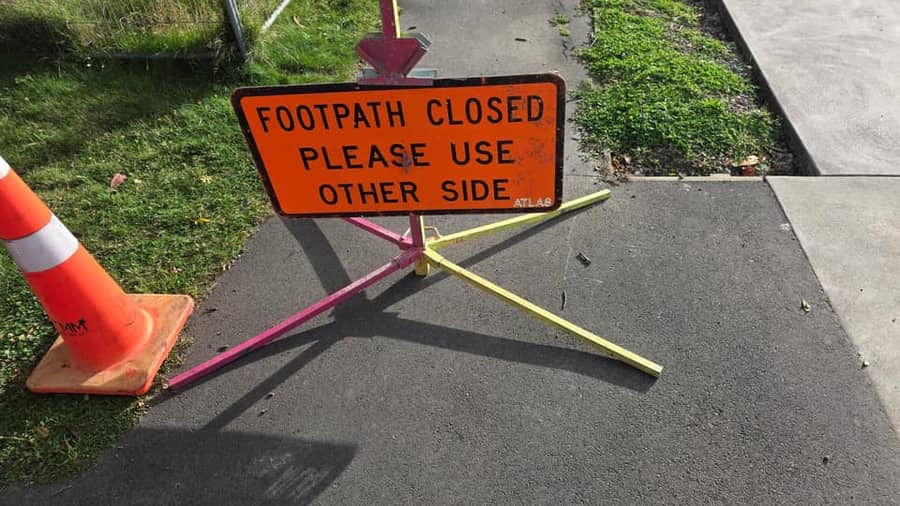
Options include using the opposite footpath, a temporary footpath on the carriageway side, a protected walkway within the work area, or staged closures that keep one side open. The right choice depends on width, traffic speed, duration and nearby accesses.

02

Accessibility

Think about wheelchairs, prams, people with limited mobility and people with vision impairments. Temporary routes should be wide enough, have stable surfaces, manageable crossfalls and clear signage. Accessibility gaps are a frequent RCA comment topic.

03

Common reviewer concerns

Reviewers often ask about the pedestrian route width, surface, protection from work vehicles, crossing points, emergency access, business access and how the route ties back into the existing footpath. Answer these explicitly in the TMP.

Contractor checklist

Before you request help

  • Confirm the work location and RCA
  • Describe the work method and staging
  • Collect plans, photos and dates
  • Check pedestrian, cyclist and property access impacts
  • Keep TMP, CAR and WAP details aligned
FAQ

Common questions

Who reviews the TMP or CAR?

The relevant council, RCA or network owner reviews the submission. Our role is to help make the information clearer, more complete and easier to respond to.

What do you need before starting?

Send the work location, scope, dates, site plans or markups, methodology, hours of work, access needs, photos if available, and any RCA comments already received.

Can you work with our on-road crew or traffic management provider?

Yes. Your TMP Designer focuses on the planning, documentation and drawing support around the job. If your project also needs on-road setup, equipment or training, we can keep the TMP, CAR/WAP and drawing information aligned while those field services are arranged with the right provider.

From scope to submission

Send the scope. We will tell you what is needed.

Send plans, photos, dates or RCA comments and get practical next steps for TMP design, CAR support, amendments or overflow planning.